Why Organization Matters
One of the biggest challenges in family history research isn't finding information—it's keeping track of it.
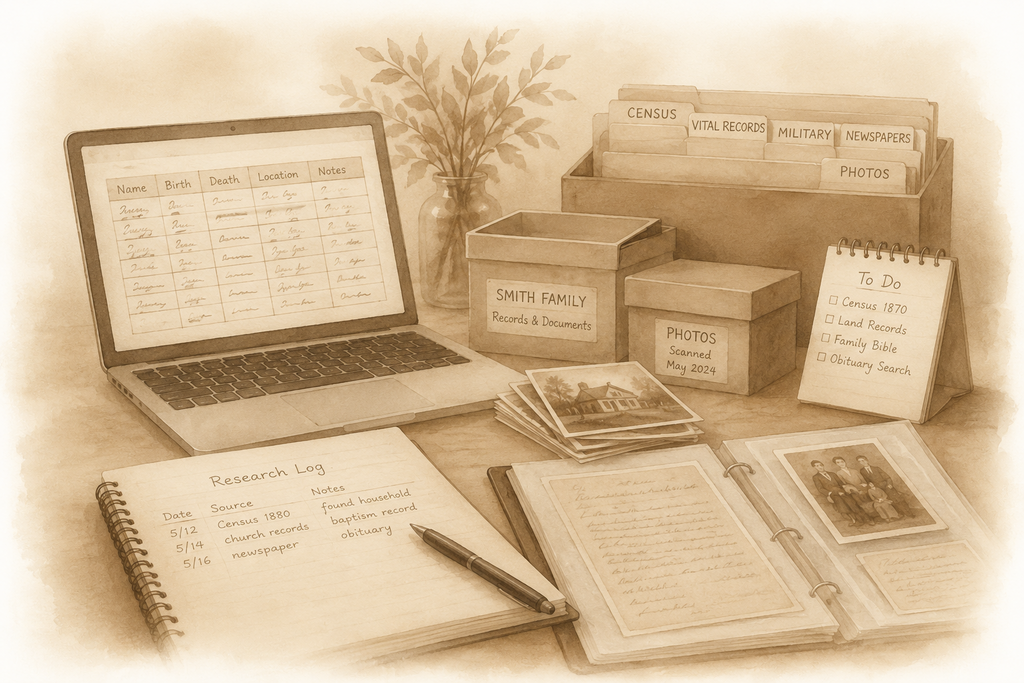
As your research grows, you'll quickly accumulate documents, photographs, certificates, notes, family stories, and research findings from multiple sources. Having a simple organizational system from the beginning can save countless hours later and help prevent valuable information from being misplaced or duplicated.
The good news? Your system doesn't have to be complicated. The important thing is choosing a method that makes sense to you and using it consistently.

Organizing Digital Files
Most researchers today work with a mixture of digital records and scanned documents.
Consider creating folders for:
Consistent file names make it much easier to find information later. Even a simple naming system can save hours of searching through folders when your collection begins to grow.
Organizing Paper Records
If you prefer working with paper copies—or simply want a backup of important documents—a basic filing system can be invaluable.
Many researchers find it helpful to keep:
The goal is to know exactly where to look when you need a particular document.
Don't Forget Your Photographs
Photographs are often among the most treasured pieces of family history.
Try to:
Photographs are often among the most treasured pieces of family history. Try to identify people, places, and dates while the information is still known.
If you're writing on the back of printed photographs, use an archival-quality photo-safe pen or pencil rather than a regular pen or marker.
Store originals carefully, keep digital copies organized, and back up important images whenever possible. A photograph without identifying information can become a mystery in just a generation or two.
Keep Track of What You've Searched
One of the most common beginner mistakes is repeating the same searches over and over.
Keeping a simple research log can help you remember:
You don't need an elaborate system to start—just enough information to avoid retracing your steps.
Record Your Discoveries
When you find something important, make a note of where it came from.
Examples might include:
Recording sources from the beginning makes it much easier to verify information later and share your findings with others.
Back Up Your Work
Nothing is more frustrating than losing years of research because of a computer failure.
Consider keeping copies of important files:
A simple backup routine can provide valuable peace of mind.
 Skeleton Key Tip
Start simple and stay consistent.
Many beginners spend more time trying to create the "perfect" filing system than actually researching. Choose a basic method that works for you, use it consistently, and improve it as your research grows.
Remember: a simple system you actually use is far better than a perfect system you never maintain.
Helpful Tools to Get You Started
(Downloadable forms and templates will be available soon.)

© 2026 Skeletons in the Closet Genealogy Services