Every family tree starts with a single branch.
When people first begin researching their family history, they often think they need old records, expensive subscriptions, or a distant relative with a perfectly documented family tree. The good news? You already have your best starting point—you.
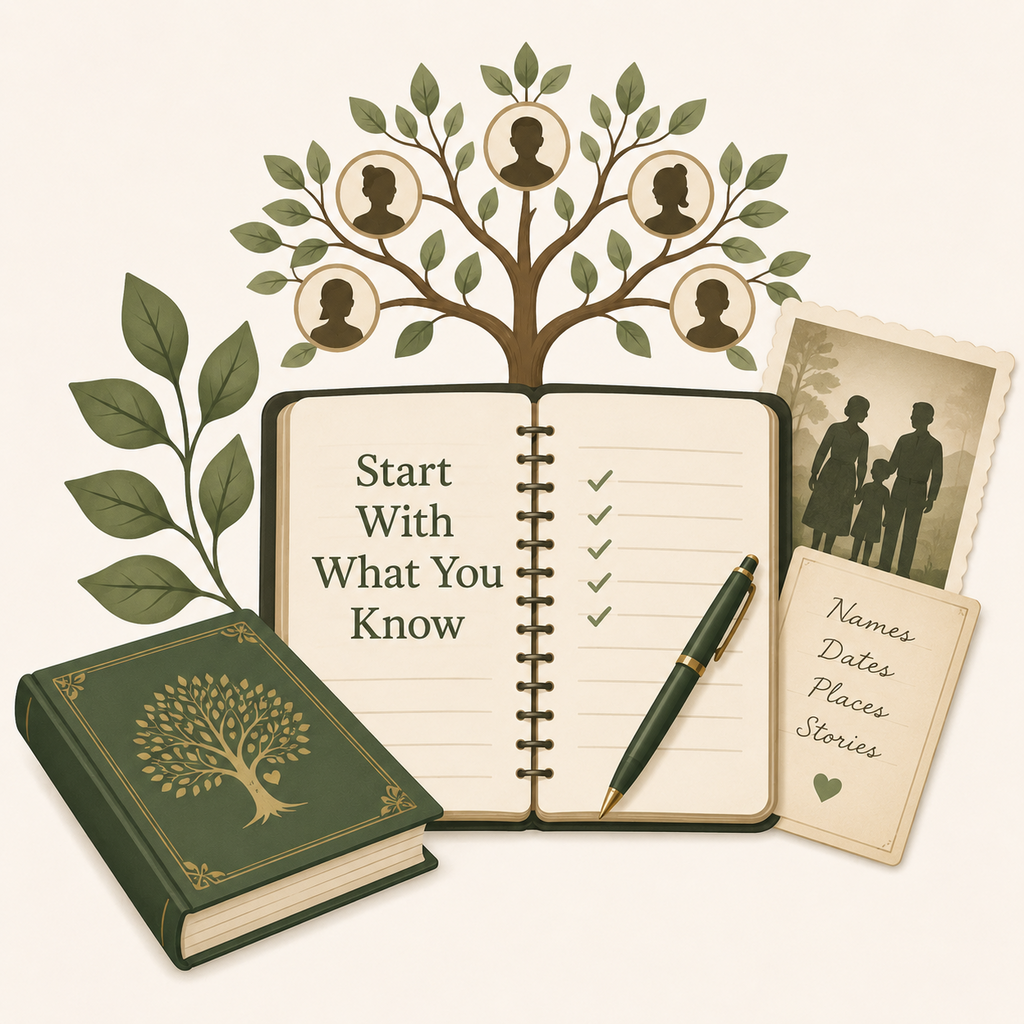
Begin with the people, places, and stories you already know. Write down your own details, then add your parents, grandparents, and other relatives. Include names, dates, places, occupations, nicknames, and any family stories you've heard over the years. Even small details can become important clues later.
Gather What You Already Have
Before searching online, take a look around your home. You may be surprised by how much family history is already within reach.
Look for:
Don't worry if you only have a few items. Every document and photograph tells part of the story.

Record Memories Before They Disappear
Family memories are some of the most valuable resources a researcher can have. A conversation with a parent, grandparent, aunt, uncle, or family friend can reveal information that may never appear in an official record.
Ask questions such as:
Take notes, record conversations (with permission), and write down names exactly as they're remembered. Even stories that seem exaggerated or incomplete can contain important clues.
Organize as You Go
You don't need a complicated filing system, but keeping things organized from the beginning will save time later.
Create folders for:
Label photographs while people can still identify them, and make a note of where information came from. Future-you will be grateful.
 Skeleton Key Tip
Most new researchers jump from one exciting discovery to another and quickly end up with dozens of open tabs, pages of notes, and half-finished family lines. Ask me how I know!
Family history research has a way of tempting us down rabbit holes. One minute you're researching your grandmother's family, and the next you're investigating a third cousin's neighbour because their surname looks familiar.
Try to resist the temptation. Choose one branch, follow the clues, and see where they lead. The other branches—and their skeletons—will still be waiting for you later.
Don't Worry About Being Perfect
Many beginners feel they need to know everything before they start. You don't.
Family history research is like putting together a puzzle without the picture on the box. You begin with a few pieces, and over time the bigger picture starts to appear.
The important thing is simply to start.
Those names, stories, photographs, and memories you already have are the foundation of your family history journey—and they may hold a few skeletons in the closet waiting to be discovered.

© 2026 Skeletons in the Closet Genealogy Services